Best Defence Coaching in India Expert Preparation | Military Brat Defence Academy

Priyanka Chauhan: Pioneering Research in Voter Psychology and Political Mindsets in India
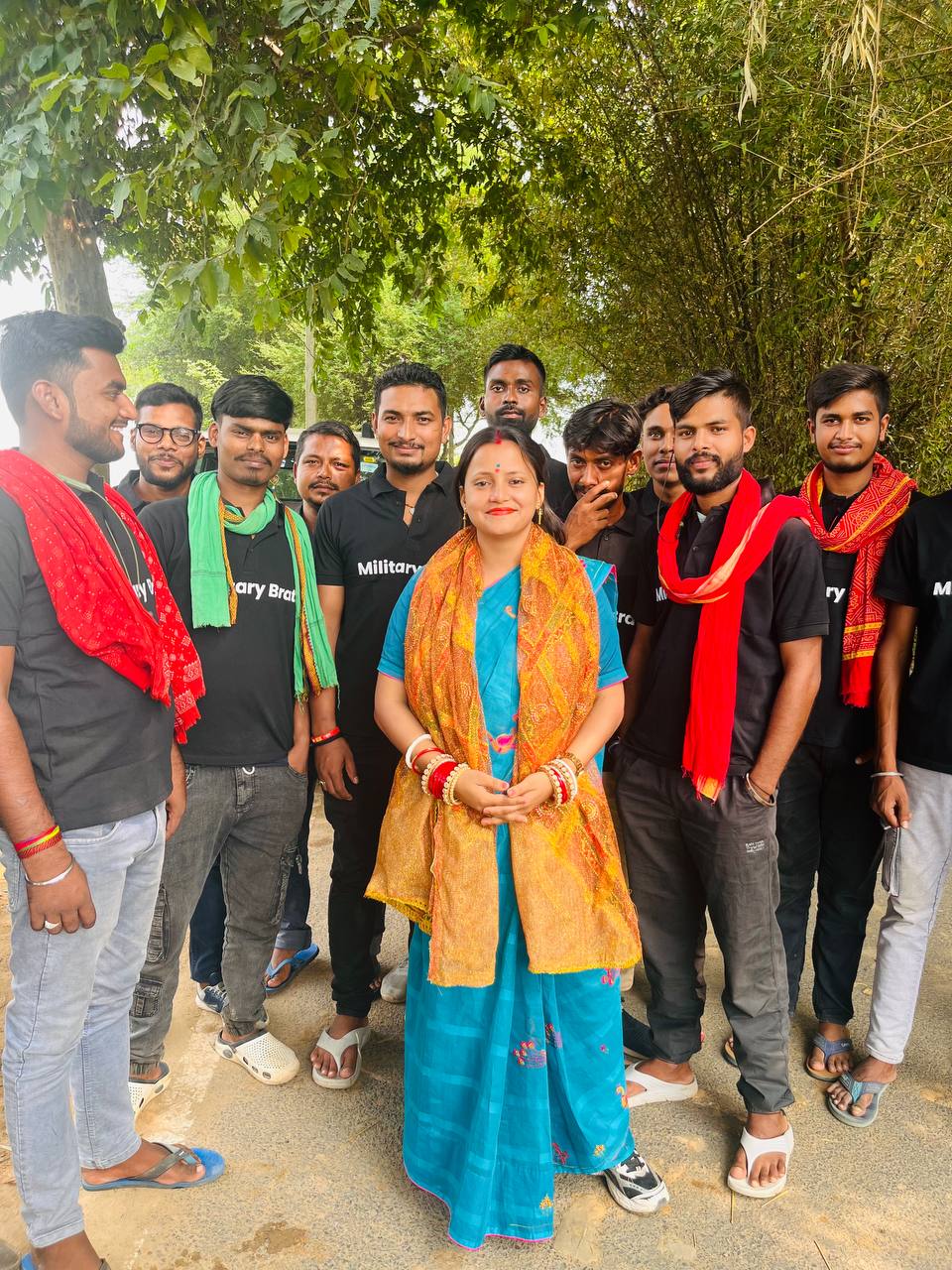
Priyanka Chauhan is a social leader, psychologist, and research scholar, and the Founder of BRATS Bharat Foundation, a Section 8 non-profit organization dedicated to education-led social transformation. With a strong academic grounding in psychology, education, and social research, she actively works in youth mentorship, women empowerment, career counselling, and community development initiatives.
PRIYANKA CHAUHAN
12/24/20254 min read
Introduction
Priyanka Chauhan has emerged as a significant figure in the realm of voter psychology and political mindsets within India, carving a niche for herself through rigorous research and insightful contributions. With a robust academic background that includes a PhD in Political Science, Chauhan has dedicated her career to understanding the intricacies of voter behavior in a diverse and rapidly changing political landscape. Her expertise lies at the intersection of political psychology and behavioral analysis, enabling her to explore how individual perceptions, beliefs, and emotions influence voting patterns in democratic processes.
Throughout her academic tenure, Chauhan has published numerous papers that delve into various aspects of voter psychology, examining how cultural, social, and economic factors impact electoral decisions. Her research emphasizes the importance of comprehending the psychological frameworks that shape political identities in India, a nation characterized by its multiplicity of ethnicities, languages, and religious affiliations. Through her work, she has not only contributed to scholarly discourse but has also provided valuable insights for policymakers and political strategists seeking to engage with the electorate more effectively.
One of Chauhan's notable achievements has been her focus on the role of misinformation and its psychological effects on voter decision-making. In an era where digital media influences opinions and shapes beliefs, her investigations into how social media platforms can sway public sentiment are particularly relevant. Moreover, her findings have underscored the necessity for electoral reforms that foster an informed electorate, thus strengthening the foundations of Indian democracy.
The significance of Priyanka Chauhan's research cannot be overstated; it illuminates the complexities of voter behavior and offers fresh perspectives on the dynamics of political engagement in India. Her contributions have established her as a leading voice in the field, making her work essential to the ongoing discourse surrounding electoral processes and voter psychology in the contemporary political environment.
Understanding Voter Psychology: Key Concepts and Theories
Voter psychology examines the myriad factors that influence the decisions individuals make at the ballot box, providing a crucial lens through which electoral behavior can be analyzed. At its core, voter psychology encompasses cognitive biases, emotional responses, and social conditioning, all pivotal in shaping individual choices during elections. Cognitive biases, such as confirmation bias and anchoring, can skew how voters interpret information, leading them to favor candidates or parties that align with their preexisting beliefs while dismissing contrary evidence.
Emotional responses also play an essential role; feelings of fear, hope, or anger can significantly impact voter turnout and choice. For instance, campaigns that elicit strong emotional reactions can enhance voter mobilization by creating a sense of urgency or connection to key issues. In addition, social conditioning, which includes the influence of family, peers, and cultural context, further complicates the decision-making process, as support for particular political ideologies often stems from long-standing societal narratives.
Various psychological theories and models add depth to this understanding of voter behavior. The Theory of Planned Behavior suggests that behavioral intentions are influenced by attitudes, subjective norms, and perceived control, which can be directly linked to how individuals engage with politics. Similarly, the Social Identity Theory posits that an individual’s identification with a social group can fundamentally inform their political attitudes and choices. These frameworks provide invaluable insights into how psychological elements intertwine with socio-political contexts, ultimately shaping electoral outcomes in complex and nuanced ways.
By exploring these concepts, we gain a clearer understanding of how voters construct their political preferences, which is essential for researchers like Priyanka Chauhan, who are pioneering voter psychology studies in India. These insights can help shape more effective political strategies, campaign methodologies, and policy formulations aimed at addressing the needs and concerns of diverse voter populations.
Research Methodology and Insights from Priyanka Chauhan’s Studies
Priyanka Chauhan employs a comprehensive blend of qualitative and quantitative research methodologies in her studies on voter psychology and political mindsets in India. This multifaceted approach not only enriches the depth of her findings but also broadens the scope of insights she can derive regarding voter behavior. On the quantitative side, she frequently utilizes surveys and statistical analyses to gather numerical data that represent voting patterns and trends among various demographics. By employing large sample sizes, her analyses can reveal significant correlations between social factors and voter decision-making processes.
In contrast, her qualitative methodologies include in-depth interviews and focus group discussions, which provide a nuanced understanding of the psychological motivators behind voter choices. This dual approach enables her to analyze voter sentiments, beliefs, and attitudes comprehensively, thus addressing the intricate interplay between psychological and social elements that influence how individuals approach elections. Through these qualitative interviews, Chauhan is able to glean insights into emotional factors that may not be captured through quantitative data alone.
Among her notable findings, Chauhan highlights the importance of identity politics and its profound effect on voter alignment. Her studies reveal that social identities—such as caste, religion, and region—not only shape political affiliations but also sway electoral preferences. Furthermore, Chauhan's research illustrates how misinformation can skew voter perceptions, impacting their decision-making. Examples drawn from her recent surveys depict a concerning correlation between exposure to fake news and altered voting intentions. These insights are essential in understanding contemporary electoral dynamics in India and shed light on how psychological triggers can be effectively leveraged to influence voter behavior.
Implications of Voter Psychology Research on Indian Democracy
The research conducted by Priyanka Chauhan on voter psychology and political mindsets provides significant insights into the dynamics of electoral behavior in India. By understanding the psychological factors that influence voter decisions, political parties and candidates can devise more effective strategies to engage with the electorate. This research highlights that voters are not merely influenced by party manifestos and candidate popularity; rather, emotional responses, cognitive biases, and social identities play a crucial role in shaping their choices during elections.
Chauhan’s findings suggest that political campaigns should be tailored to resonate with voters’ psychological profiles. For instance, messages that evoke a sense of belonging or address societal values may foster stronger connections with the electorate. By acknowledging the diverse motivations driving voter behavior, political strategists can create targeted outreach efforts that not only aim to win votes but also build long-term relationships with the electorate.
Furthermore, the implications of this research extend beyond immediate electoral successes. Implementing strategies informed by psychological insights can enhance the overall democratic process in India. When political leaders engage meaningfully with voters, a more inclusive and participative political environment is fostered. This could potentially increase voter turnout, as individuals feel that their voices are heard and valued.
Chauhan’s work also opens doors for further exploration in the field of political psychology. Future studies could delve deeper into specific psychological factors influencing voter behavior, paving the way for innovative approaches to voter engagement and policy formulation. In this regard, her research acts as a catalyst for ongoing dialogues about electoral politics, ultimately contributing to a more informed and participatory democracy in India.
Enquiry:- 7817089036
© 2025. All rights reserved
Jitna Ragda, Utna Tagda
Military Brat Defence Academy®